



A bright white smile is something many people want, but not everyone can enjoy traditional whitening methods without discomfort. If you have sensitive teeth, you may already know that some whitening products can cause sharp pain, tingling, or long-lasting sensitivity. The good news is that you don’t have to give up on whitening your teeth. There are several safe and effective options designed specifically for people with sensitive teeth.
In this article, we will explain the best teeth whitening treatments for sensitive teeth, how they work, what to avoid, and how you can achieve a brighter smile without pain. Everything is written in a simple, human way so it’s easy to understand and follow.
Why Teeth Become Sensitive During Whitening
Before choosing a whitening treatment, it helps to understand why sensitivity happens.
Teeth whitening products usually contain peroxide-based chemicals like hydrogen peroxide or carbamide peroxide. These ingredients work by breaking down stains on the enamel. However, they can also temporarily pass through the enamel and reach the inner layer of the tooth, called the dentin.
When this happens, the nerves inside the tooth may become irritated, leading to:
- Sharp pain when drinking cold or hot drinks
- Tingling sensations
- General tooth discomfort
- Gum irritation
People with naturally thin enamel or existing sensitivity are more likely to feel these effects.
Best Teeth Whitening Treatments for Sensitive Teeth
Now let’s look at the safest and most effective options you can use without hurting your teeth.
1. Whitening Toothpaste for Sensitive Teeth
One of the easiest and safest ways to whiten teeth is by using a special whitening toothpaste designed for sensitivity.
These toothpastes do not use strong bleaching agents. Instead, they:
- Remove surface stains gently
- Strengthen enamel
- Block pain signals from nerves
Ingredients like potassium nitrate and fluoride help reduce sensitivity over time.
Why it works well:
- Very low risk of pain
- Affordable and easy to use
- Suitable for daily use
What to expect:
You won’t see instant whitening. Results usually appear after 2–4 weeks of consistent use.
2. Low-Peroxide Whitening Strips
Traditional whitening strips can be too strong for sensitive teeth, but low-peroxide versions are much gentler.
These strips contain a reduced amount of bleaching agent, which slowly removes stains without irritating the teeth too much.
Benefits:
- Noticeable whitening in 1–2 weeks
- Less pain compared to standard strips
- Easy at-home treatment
Tips for use:
- Use every other day instead of daily
- Apply fluoride toothpaste afterward
- Avoid cold drinks during treatment
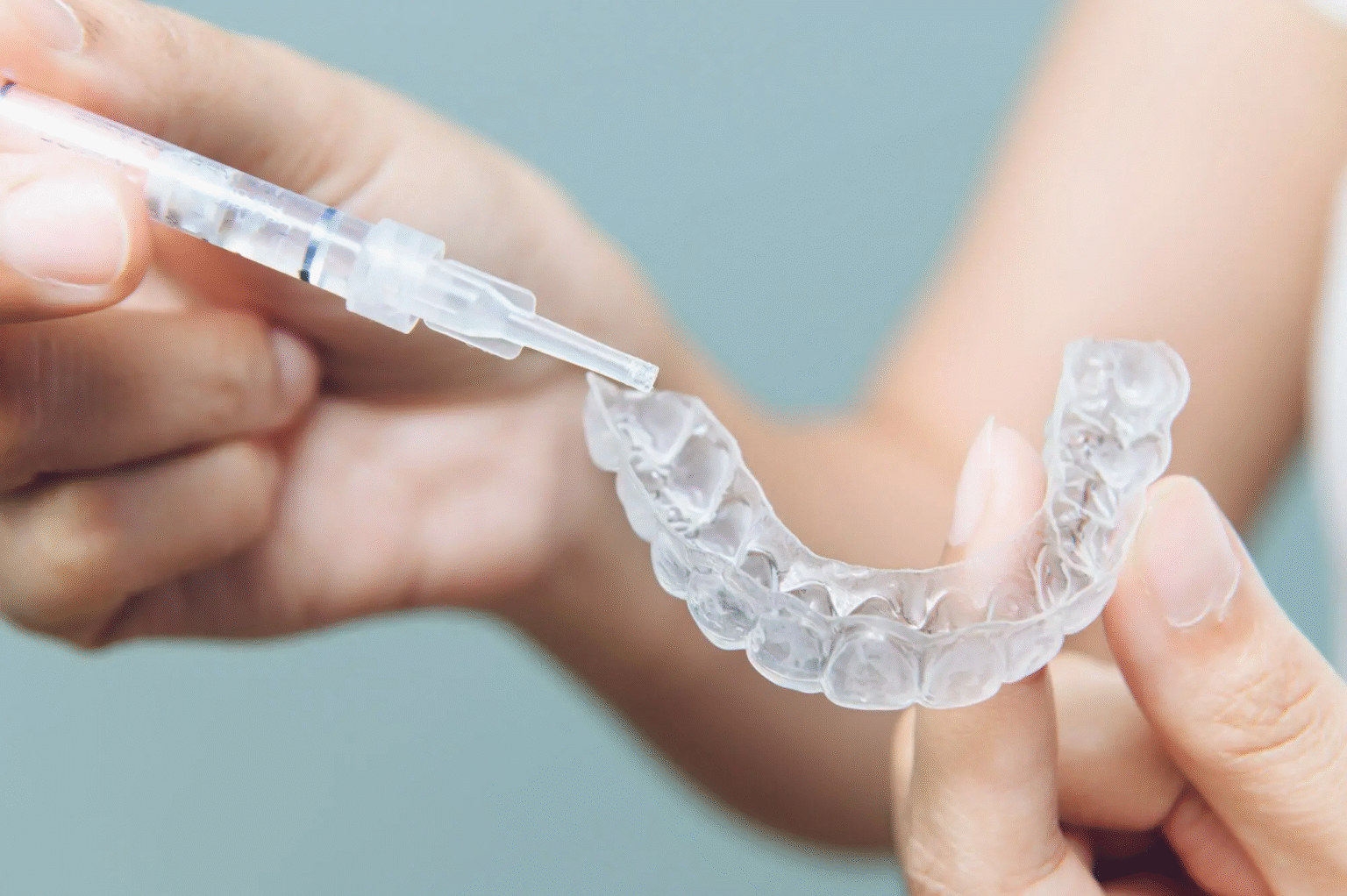
3. Desensitizing Whitening Gel Trays
Custom or pre-filled whitening trays are another good option. For sensitive teeth, choose trays that include desensitizing ingredients like potassium nitrate.
These trays slowly release whitening gel, which reduces shock to the teeth.
Why people like them:
- Even whitening results
- More controlled application
- Less gum irritation
Best practice:
Use them for shorter sessions than recommended at first, then gradually increase time as your teeth adjust.
4. LED Whitening Kits with Low Strength Gel
LED whitening kits use light technology to speed up the whitening process. When combined with low-strength gel, they can be safer for sensitive teeth.
The light helps activate the gel without needing high peroxide levels.
Advantages:
- Faster results than toothpaste
- Less chemical exposure
- Can be used at home
Important note:
Always choose kits labeled for “sensitive teeth” or “low sensitivity formula.”
5. Professional Dental Whitening for Sensitive Teeth
If you want the safest and most controlled option, professional whitening at a dental clinic is a strong choice.
Dentists can adjust the strength of the whitening gel and apply protective layers on your gums and enamel.
Benefits:
- Custom treatment based on your sensitivity level
- Faster and more predictable results
- Reduced risk of damage
Extra care:
Dentists may apply a desensitizing gel before or after treatment to reduce discomfort.
6. Natural Whitening Methods (Gentle Options)
Some people prefer natural methods for mild whitening. While these won’t give dramatic results, they are very gentle on sensitive teeth.
Examples include:
- Baking soda (used occasionally)
- Oil pulling with coconut oil
- Eating crunchy fruits like apples
- Maintaining good oral hygiene
Important warning:
Avoid using acidic DIY methods like lemon juice, as they can worsen sensitivity and damage enamel.
Tips to Avoid Pain During Whitening
Even the best treatments can cause discomfort if not used correctly. Here are some simple tips:
- Do not overuse whitening products
- Take breaks between treatments
- Use sensitive toothpaste daily
- Avoid very hot or cold foods during whitening
- Brush gently with a soft toothbrush
These habits can make a big difference in reducing pain.
What to Avoid If You Have Sensitive Teeth
If your teeth are sensitive, stay away from:
- High-strength peroxide gels
- Over-the-counter aggressive whitening kits
- Frequent whitening sessions
- DIY acid-based whitening hacks
These can damage enamel and make sensitivity worse over time.
How Long Does Whitening Take for Sensitive Teeth?
Whitening results vary depending on the method:
- Whitening toothpaste: 2–4 weeks
- Low-peroxide strips: 1–2 weeks
- LED kits: 5–10 days
- Professional whitening: 1–2 visits
Gentler treatments take longer, but they are much safer and more comfortable.
Final Thoughts
If you have sensitive teeth, whitening does not have to be painful or risky. The key is choosing gentle treatments and using them correctly. Options like sensitive whitening toothpaste, low-peroxide strips, LED kits, and professional dental care can all help you achieve a brighter smile without discomfort.
The most important thing is to listen to your teeth. If something feels painful, stop and switch to a milder option. A healthy smile is always more important than a fast result.
With patience and the right approach, you can enjoy whiter teeth and still keep your comfort intact.
FAQs
1. Can I whiten my teeth if I have very sensitive teeth?
Yes, you can. You just need to choose low-strength or sensitivity-friendly whitening products.
2. What is the safest whitening method for sensitive teeth?
Whitening toothpaste for sensitive teeth and professional dental treatments are usually the safest options.
3. How can I reduce pain during whitening?
Use desensitizing toothpaste, avoid overuse, and choose low-peroxide products.
4. Are natural whitening methods effective?
They are very gentle and can help slightly, but results are slower compared to whitening products.
5. Should I stop whitening if I feel pain?
Yes, if you feel strong pain, stop immediately and switch to a gentler method or consult a dentist.